
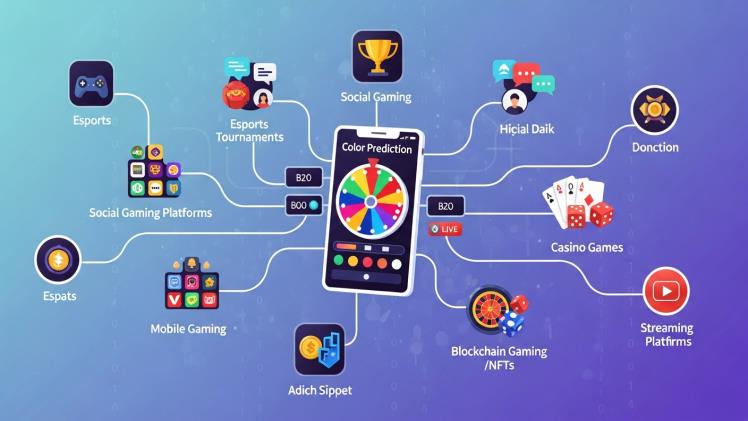
Color prediction games have become a significant part of the online entertainment industry, attracting players across diverse regions and platforms. Their appeal lies in simplicity, accessibility, and the thrill of chance-based outcomes. Yet, as these ecosystems expand, interoperability emerges as a critical challenge. Interoperability refers to the ability of different systems, platforms, and technologies to work together seamlessly. In the context of color prediction games, it involves integrating payment systems, cross-platform synchronization, regulatory compliance, and user experience across varied devices and jurisdictions. Understanding these challenges is essential for building sustainable and trustworthy ecosystems.
Fragmented Technological Infrastructure
One of the most pressing interoperability challenges in color prediction game ecosystems is the fragmented technological infrastructure. Players access these games through mobile applications, web browsers, and desktop platforms, each with its own technical requirements. Ensuring that gameplay, outcomes, and account information remain consistent across devices is complex. Differences in operating systems, network speeds, and hardware capabilities often lead to inconsistencies in user experience. Platforms must invest heavily in standardization and testing to overcome these barriers, but achieving seamless interoperability across diverse technologies remains a formidable task.
Payment System Integration
Financial transactions are central to color prediction games, and interoperability challenges are particularly evident in payment system integration. Players use a wide range of payment methods, including credit cards, digital wallets, bank transfers, and cryptocurrency. Each payment system operates under different protocols, security standards, and regional regulations. Integrating these systems into a single platform without compromising security or efficiency is difficult. Delays, errors, or incompatibility in payment processing can erode trust and discourage participation. Addressing this challenge requires platforms to adopt flexible architectures that support multiple payment gateways while ensuring compliance with financial regulations.
Regulatory Diversity
Color prediction games operate across multiple jurisdictions, each with its own legal and regulatory frameworks. Interoperability challenges arise when platforms attempt to align their operations with diverse rules governing online gaming, financial transactions, and data protection. For example, a platform may comply with regulations in one country but face restrictions in another. This regulatory diversity complicates cross-border interoperability, as platforms must adapt their systems to meet varying requirements. Failure to address these challenges can lead to legal disputes, fines, or restrictions on operations. Achieving interoperability in regulatory compliance demands continuous monitoring and adaptation.
Data Management and Security
Data management is another area where interoperability challenges are pronounced. Color prediction games generate vast amounts of data, including player behavior, financial transactions, and game outcomes. Ensuring that this data is consistent, secure, and accessible across different systems is complex. Interoperability issues often arise when platforms attempt to integrate third-party services or analytics tools. Differences in data formats, encryption standards, and storage protocols can lead to inefficiencies or vulnerabilities. Maintaining interoperability in data management requires robust frameworks that prioritize security, transparency, and consistency across all systems.
User Experience Consistency
Players expect a seamless experience regardless of the device or platform they use. Interoperability challenges often undermine this expectation, leading to discrepancies in gameplay, delays in synchronization, or inconsistencies in visual design. For example, a player may place a bet on a mobile device but encounter delays when checking results on a desktop. Such inconsistencies reduce engagement and erode trust. Platforms must overcome these challenges by designing user interfaces and systems that deliver consistent experiences across all platforms. Achieving this level of interoperability requires significant investment in design, testing, and optimization.
Future Directions
Addressing interoperability challenges in color prediction game ecosystems will require innovation and collaboration. Emerging technologies such as blockchain may offer solutions by providing standardized protocols for transactions and data management. Similarly, cloud infrastructure and edge computing can enhance scalability and reduce latency, improving interoperability across platforms. Collaboration between regulators, payment providers, and gaming platforms will also be essential in creating unified standards that support seamless operations. The future of color prediction games depends on the industry’s ability to overcome these challenges and deliver ecosystems that are both accessible and trustworthy.
Conclusion
Interoperability challenges in color prediction game ecosystems highlight the complexity of integrating diverse technologies, payment systems, regulatory frameworks, and user experiences. Fragmented infrastructure, financial integration difficulties, regulatory diversity, data management issues, and inconsistent user experiences all contribute to the problem. Overcoming these challenges requires innovation, collaboration, and continuous adaptation. As the industry evolves, platforms like tiranga that successfully address interoperability will not only enhance player satisfaction but also secure long-term sustainability. Ultimately, interoperability is not just a technical necessity but a strategic imperative for the future of color prediction games.