
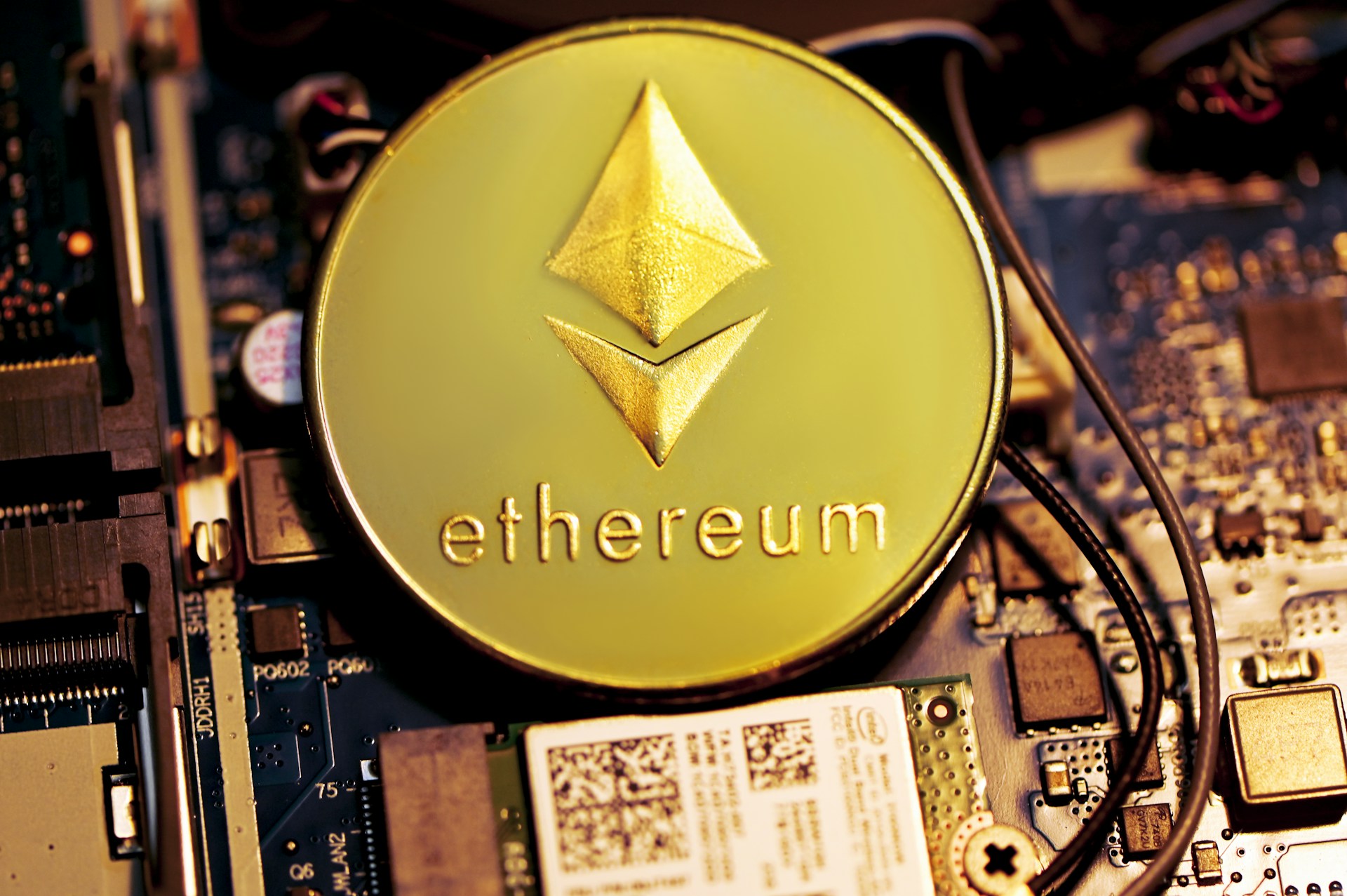
Ethereum has become one of the most important building blocks of the modern crypto ecosystem, not because it is simply a digital currency, but because it introduced something much bigger: programmable money.
By enabling smart contracts—self-executing code that runs on the blockchain—Ethereum made it possible to create entire financial systems and digital ownership models without relying on traditional intermediaries. Two of the most significant outcomes of this innovation are decentralized finance (DeFi) and non-fungible tokens (NFTs), both of which have reshaped how people think about value, ownership, and access.
At its core, Ethereum functions as a decentralized platform where developers can build applications that operate exactly as programmed, without downtime or interference. This reliability and transparency are critical for financial systems. In traditional finance, trust is placed in banks, brokers, and institutions. In DeFi, that trust is replaced by code that anyone can inspect. Smart contracts define the rules, and once deployed, they execute automatically when conditions are met.
DeFi is essentially a reimagining of financial services. Instead of going through a bank to borrow money, users can interact directly with a smart contract that manages lending and borrowing. Instead of relying on a centralized exchange to trade assets, users can trade peer-to-peer through decentralized platforms. Ethereum provides the infrastructure for all of this by hosting the smart contracts that power these services.
One of the reasons Ethereum has become the dominant platform for DeFi is its ecosystem. Over time, a network effect has developed, where developers, users, and liquidity all concentrate in the same environment. This makes it easier to build new applications that can interact with existing ones. For example, a lending platform can integrate with a decentralized exchange, allowing users to move assets seamlessly between services. This composability, often described as “money legos,” is a defining feature of Ethereum’s DeFi landscape.
Security and transparency also play a major role. Every transaction on Ethereum is recorded on a public ledger, which means anyone can verify what is happening. This level of openness reduces the risk of hidden manipulation, although it does not eliminate risk entirely. Smart contracts must be carefully designed and audited, as bugs or vulnerabilities can lead to significant losses. Even so, the ability to verify transactions and contract logic is a major advantage over opaque traditional systems.
NFTs represent another major innovation built on Ethereum. While cryptocurrencies like ETH are interchangeable, NFTs are unique digital assets that represent ownership of a specific item. This could be digital art, music, virtual real estate, or even in-game items. Ethereum’s smart contracts allow creators to define ownership, transfer rights, and even embed royalties directly into the asset. This means that creators can continue to earn from their work every time it is resold, something that is difficult to achieve in traditional markets.
The rise of NFTs has expanded Ethereum’s use beyond finance into culture and digital identity. Artists, musicians, and creators now have new ways to monetize their work without relying on intermediaries. Collectors can verify the authenticity and provenance of digital assets, which was previously a major challenge in the digital world. While the NFT market has experienced cycles of hype and correction, the underlying concept of verifiable digital ownership remains powerful.
Ethereum’s role in both DeFi and NFTs is not just about enabling transactions, but about creating new economic models. In DeFi, users can earn yield, provide liquidity, and participate in governance decisions. In NFTs, creators can build communities around their work and engage directly with their audience. These models challenge traditional structures and offer alternatives that are more open and accessible.
However, there are also challenges. High transaction fees have been a persistent issue, especially during periods of high demand. This has led to the development of scaling solutions and alternative networks, but Ethereum continues to evolve to address these limitations. Security is another concern, as the decentralized nature of these systems means users are responsible for their own assets. Mistakes or vulnerabilities can have serious consequences, which highlights the importance of education and careful participation.
Despite these challenges, Ethereum’s influence on DeFi and NFTs is undeniable. It has provided the foundation for a new generation of applications that operate without centralized control, offering greater transparency and flexibility. As the technology matures, improvements in scalability and user experience are likely to make these systems even more accessible.
The future of Ethereum in this space will depend on its ability to continue innovating while maintaining its core principles of decentralization and security. If it succeeds, it will remain a central player in shaping how value is created, exchanged, and owned in the digital age.