
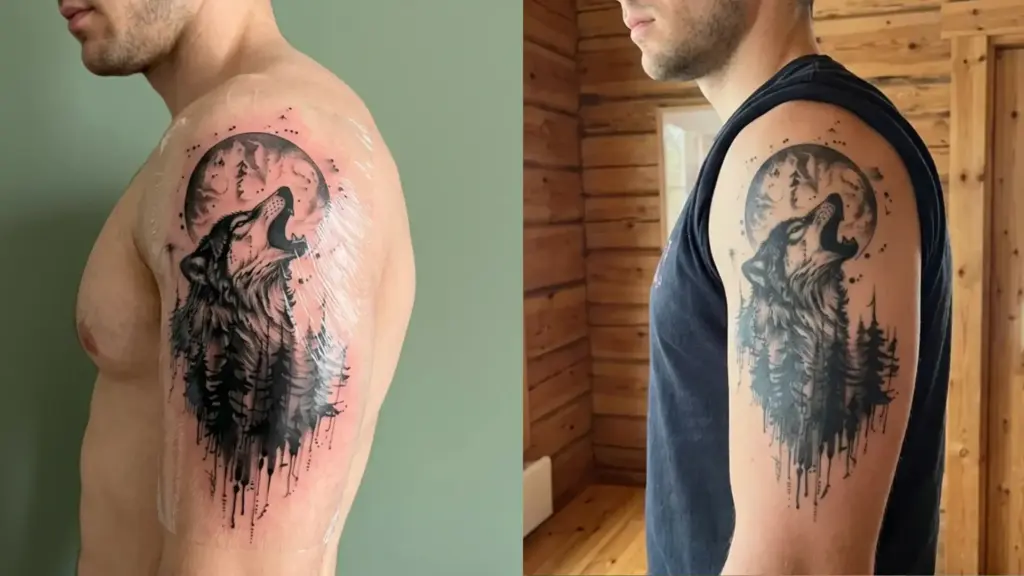
Getting a new tattoo is exciting, but the real work starts after you leave the studio. A tattoo is not just fresh ink on the skin — it is also a controlled skin injury that needs time, care, and patience to heal properly. Many people ask the same question before or right after their appointment: how long does a tattoo take to heal? The short answer is that the surface of the skin usually looks healed within 2 to 4 weeks, but the deeper layers can continue recovering for several months.
Understanding the tattoo healing process helps you avoid unnecessary panic, protect your new artwork, and know when something may need professional attention. If you are planning a tattoo with Inkdecent.ca, your artist can also explain what kind of aftercare fits your tattoo style, placement, and skin.
Stage 1: The First 24–48 Hours
The first stage begins as soon as your tattoo is finished. Your artist will usually clean the tattooed area and cover it with a protective bandage, second skin, or wrap. During this time, the tattoo may feel sore, warm, tight, or slightly swollen. Some redness is also normal, especially around the tattooed area.
You may notice plasma, ink, or a small amount of blood under the wrap. This can look dramatic, but in most cases, it is a normal part of the early healing process. The skin is trying to protect itself and begin repair.
At this stage, follow your tattoo artist’s instructions carefully. Do not remove the bandage too early unless they told you to. Once it is time to clean the tattoo, wash your hands first, then gently clean the area with lukewarm water and mild, fragrance-free soap. Pat it dry with a clean paper towel. Do not rub.
Stage 2: Days 3–7 — Peeling, Tightness, and Itching
After a few days, your tattoo may start to feel dry or tight. This is when many people begin to wonder again: how long does a tattoo take to heal if it already feels uncomfortable? The answer depends on your skin, tattoo size, placement, and aftercare routine, but this stage is completely normal.
Peeling often begins around day 3 or day 4. The tattoo may look dull, flaky, or uneven. This does not mean the tattoo is damaged. It simply means the top layer of skin is shedding.
The most important rule during this stage is simple: do not pick, scratch, or peel the skin. Let flakes fall off naturally. Pulling at peeling skin can remove pigment and create patchy areas in the tattoo.
Use a thin layer of the recommended tattoo aftercare product or a fragrance-free moisturizer. More is not better. Too much product can clog the skin and slow healing. The goal is to keep the tattoo lightly moisturized, not wet or greasy.
Stage 3: Weeks 2–4 — The Tattoo Starts Looking Settled
By the second week, the tattoo usually becomes less irritated. Peeling may continue, but it should gradually slow down. The tattoo may still look slightly cloudy or shiny. This is sometimes called the “silver skin” stage, when new skin is forming over the tattoo.
At this point, many tattoos look healed from the outside, but the skin is still recovering underneath. This is why you should continue being careful. Avoid swimming pools, hot tubs, saunas, baths, and direct sun exposure until the tattoo is fully healed.
You should also avoid tight clothing that rubs against the tattoo. Friction can irritate the skin and affect the final result, especially on areas like the ribs, thighs, shoulders, ankles, or arms.
Stage 4: Full Healing — Several Weeks to a Few Months
So, how long does a tattoo take to heal completely? For most people, the visible healing stage takes about 2 to 4 weeks. However, deeper skin healing can take 2 to 6 months. Larger tattoos, heavy shading, color tattoos, and tattoos in high-friction areas may take longer.
Even after the tattoo looks healed, it is smart to keep caring for your skin. Use moisturizer when needed and protect the tattoo from the sun. UV exposure can fade tattoos over time, especially color tattoos and fine line work.
Once your tattoo is fully healed, sunscreen becomes one of the best ways to preserve it. A high-quality tattoo can still fade quickly if the skin is regularly exposed to strong sunlight without protection.
Tattoo Healing Tips
Good aftercare does not need to be complicated. Keep the tattoo clean, moisturized, and protected. Wash it gently, avoid touching it with dirty hands, and never scratch or pick at scabs.
Wear loose, breathable clothing while the tattoo is healing. Avoid workouts that cause heavy sweating or friction on the tattooed area during the early stage. If your tattoo is on a part of the body that moves a lot, such as the elbow, knee, wrist, or ankle, healing may feel a little more uncomfortable.
Sleep carefully, especially during the first few nights. Try not to sleep directly on the fresh tattoo. Use clean sheets and avoid letting pets touch or lick the area.
Stay hydrated, eat well, and let your body rest. Healing is not only about what you put on the skin. Your overall condition also matters.
When to Be Concerned
Some redness, swelling, itching, peeling, and mild discomfort are normal. However, you should contact your tattoo artist or a medical professional if you notice increasing pain, spreading redness, strong heat, pus, a bad smell, fever, or swelling that gets worse instead of better.
A tattoo should gradually improve day by day. If it suddenly becomes more painful or inflamed after initially getting better, do not ignore it. You can also contact your artist at Inkdecent if you are unsure whether your tattoo is healing normally or if you need aftercare clarification.
Final Thoughts
The tattoo healing process is different for everyone, but the general timeline is fairly predictable. The first few days are about protection and cleaning. The first week often brings peeling and itching. By weeks 2 to 4, the tattoo usually looks much calmer, although deeper healing continues below the surface.
If you are wondering how long does a tattoo take to heal, remember this: your tattoo may look healed in a few weeks, but your skin needs more time to fully recover. Be patient, follow your artist’s aftercare instructions, and treat your tattoo gently. Good healing helps your tattoo stay clean, bright, and beautiful for years.